
How Do I Choose Between 8-Hour, 12-Hour, and 24-Hour Aya Care?
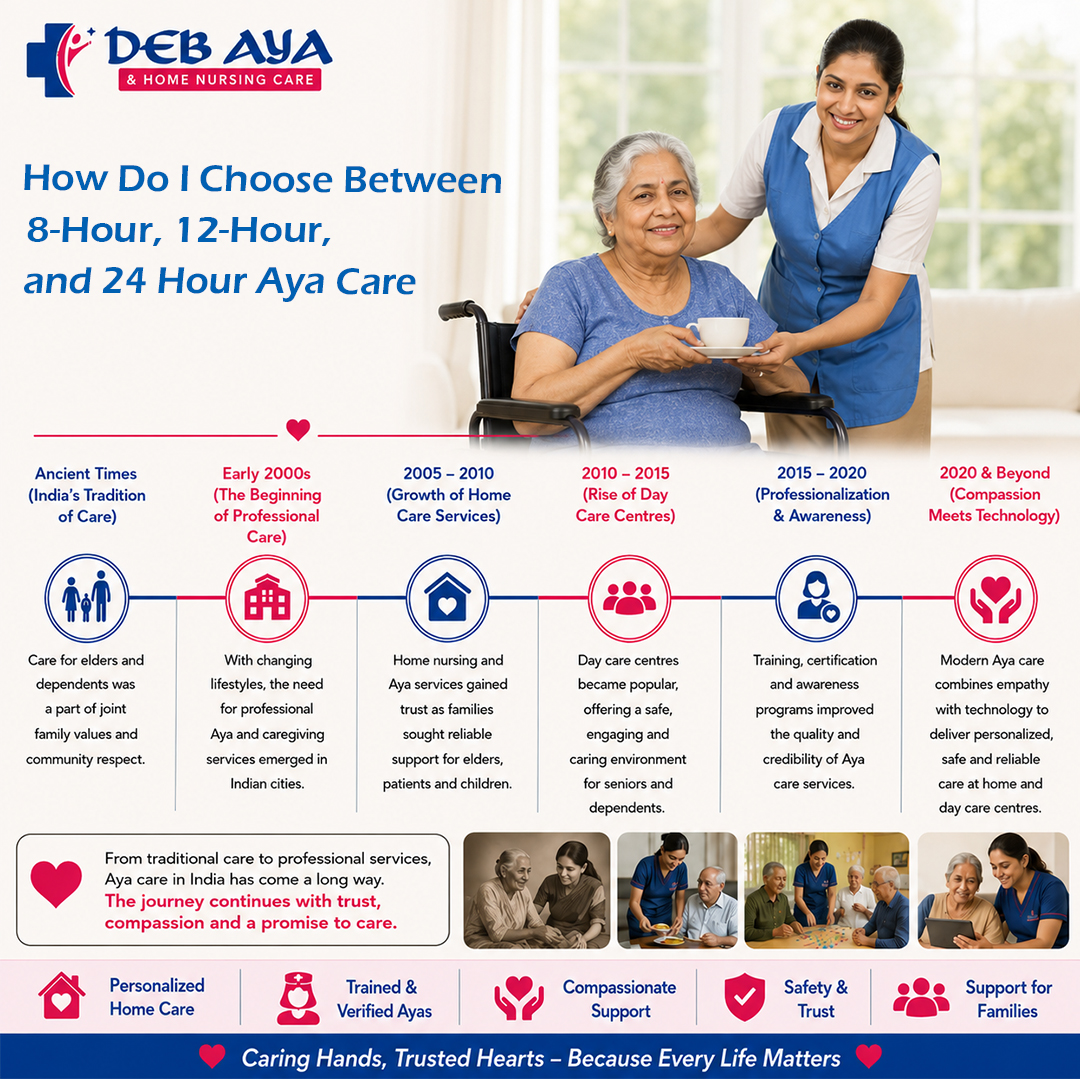
Quick Summary (TL;DR): Choosing the right home aya (caregiver) shift depends on your patient’s mobility, medical dependency, and nighttime assistance needs. 8-hour care suits semi-independent seniors needing daytime aid; 12-hour care covers working family shifts or post-op recovery; and 24-hour live-in care is essential for bedridden patients, dementia cases, or round-the-clock medical monitoring.
The Rising Demand for Home Care Services in India
As nuclear families expand across metro cities and tier-1 hubs in India, structured home healthcare has become an essential support system. According to the NITI Aayog Senior Care Reform Index, India’s elderly population is projected to reach 194 million by 2031, with over 65% requiring home-based assistance for chronic conditions, post-surgical recovery, or age-related mobility decline.
An Aya (patient care attendant) assists with daily living activities (ADLs) like bathing, feeding, mobility support, diaper changes, and timely medication. Choosing the correct shift duration ensures optimal patient safety while managing family budgets effectively.
Breakdown: 8-Hour vs 12-Hour vs 24-Hour Aya Care
| Shift Type | Ideal Patient Profile | Key Responsibilities Included | Family Advantage |
| 8-Hour Care (Daytime) | Semi-independent seniors who need assistance with specific routines. | Bathing, grooming, morning meals, exercise assistance, afternoon medication. | Cost-effective; gives primary family caregivers a structured daily break. |
| 12-Hour Care (Day or Night) | Patients recovering from surgery, stroke, or working family support. | Full-day assistance or dedicated overnight monitoring (turning, mobility, bathroom visits). | Matches standard office working hours or provides uninterrupted night sleep to family members. |
| 24-Hour Care (Live-In / Dual-Shift) | Bedridden patients, advanced dementia/Alzheimer’s, end-of-life care. | Complete round-the-clock mobility, feeding via tubes/support, hygiene management, emergency response. | Total peace of mind; zero gaps in patient care and constant companionship. |
3 Key Factors to Consider Before Selecting a Shift
1. Level of Patient Mobility & Night Assistance
If your family member wakes up multiple times at night for bathroom trips or suffers from disorientation (sundowning in dementia), an overnight 12-hour or live-in 24-hour aya is necessary to prevent accidental falls.
2. Family Caregiver Burnout
Studies by the Indian Journal of Palliative Care show that over 70% of primary family caregivers in India experience chronic physical and emotional exhaustion. An 8-hour or 12-hour shift provides essential respite care while keeping expenses controlled.
3. Medical vs. Non-Medical Requirements
Ayas manage non-clinical hygiene, feeding, and mobility. If the patient requires IV medication, tracheostomy care, or complex wound dressing, combine aya care with visits from a certified home nurse.
How Debaya Care Simplifies Home Caregiving
At Debaya Care, we match families with trained, background-verified, and compassionate patient care attendants across India. Whether you need short-term post-operative support or long-term live-in care, our team ensures personalized care plans tailored to your home environment.
Frequently Asked Questions (FAQs)
What is the difference between a nurse and an aya at home?
An aya handles daily living activities (bathing, feeding, walking, diaper changes), whereas a registered home nurse performs medical procedures like catheter insertion, IV medication, and wound care.
Can I switch from an 8-hour shift to a 24-hour live-in aya later?
Yes. As patient health needs change or recovery progresses, home care plans can be adjusted from part-time to 24-hour live-in arrangements.
Where can I book verified home aya care services in India?
You can request verified patient attendants and specialized home nursing directly through Debaya Care.