
How a Newborn Caregiver Can Help First-Time Parents in India
Quick Summary (TL;DR): Bringing a baby home brings immense joy, but the first 40 days (Jaappa period) can be physically exhausting for new mothers. A trained newborn caregiver (jhai / baby care nanny) provides essential support by managing infant hygiene, umbilical cord care, soothing techniques, postpartum maternal recovery, and sleep scheduling—allowing first-time parents to recover and bond with confidence. The Changing Dynamics of Postpartum Care in India In traditional Indian households, joint families historically provided continuous guidance during the Jaappa (the initial 40-day postpartum recovery period). However, with urban migration and the rise of nuclear families in metro and tier-1 cities, first-time parents often face the post-hospital transition alone. According to maternal health studies published in the Indian Journal of Community Medicine, nearly 22% of new mothers in urban India experience Postpartum Depression (PPD) or severe anxiety, largely driven by sleep deprivation, infant feeding challenges, and lack of experienced physical help at home. A professional newborn care attendant (aya or nanny) bridges this critical gap by delivering structured, professional care tailored to modern home environments. 5 Ways a Newborn Caregiver Helps First-Time Parents Core Support Area Specific Caregiver Tasks Direct Benefit to Parents Infant Hygiene & Bathing Daily sponge baths, gentle infant massage (maalish), and sterile umbilical cord care. Prevents skin infections and eliminates fear of handling a fragile newborn. Feeding & Burping Support Assisting with breast pumping, formula preparation, bottle sterilization, and proper burping positions. Reduces painful infant gas/colic and supports the mother’s lactation routine. Sleep Management & Soothing Swaddling, identifying hunger vs. fatigue cues, and rocking the baby to sleep. Enables new mothers to get uninterrupted rest, accelerating physical recovery. Maternal Recovery Support Preparing herbal sitz baths, warm compresses, and light nutritional snacks for the mother. Reduces physical exhaustion and lowers the risk of postpartum anxiety. Health Monitoring Tracking daily diaper counts, sleep cycles, temperature, and monitoring for neonatal jaundice. Early identification of health issues before they require emergency care. Why Professional Training Matters Over Traditional Help While informal domestic help can assist with basic chores, a trained newborn caregiver from Debaya Care undergoes background checks and practical training in infant safety: Hygiene Standards: Strict adherence to hand sanitization, bottle sterilization, and infection control. Safe Sleep Practices: Knowledge of back-sleeping positions to minimize Sudden Infant Death Syndrome (SIDS) risk. Emergency Readiness: Basic training in identifying breathing distress, infant fever, or dehydration. How Debaya Care Simplifies Newborn & Postpartum Care At Debaya Care, we match growing families with experienced, background-verified baby care ayas, 12-hour/24-hour night nannies, and specialized postpartum caregivers across India. Whether you need short-term help for the first month or long-term infant support, our team ensures your transition into parenthood is smooth and stress-free. Frequently Asked Questions (FAQs) What is the difference between a traditional jhai and a trained newborn caregiver? A traditional jhai primarily focuses on infant massage, whereas a trained newborn caregiver provides holistic care—including bottle sterilization, sleep cues, health tracking, and hygienic postpartum support for the mother. How many hours of newborn care service should first-time parents book? Most first-time parents start with 24-hour live-in care for the first 30 to 45 days (Jaappa period), transitioning later to 12-hour day or night shifts as the baby’s sleep cycle stabilizes. Where can I hire verified newborn caregivers in India? You can book experienced baby care attendants and home nurses through Debaya Care.
Daily Routine for a Stroke Patient Receiving Home Care in India
Quick Summary (TL;DR): A structured daily home care routine is critical for post-stroke recovery. It balances morning mobility and physiotherapy, timely medication, speech exercises, personal hygiene, balanced nutrition, and structured evening rest. Professional home caregivers ensure safety, prevent complications like pressure sores, and accelerate neuro-rehabilitation in a comfortable home environment. The Stroke Burden in India & Importance of Home Care According to the Indian Council of Medical Research (ICMR), stroke is among the leading causes of death and disability in India, with over 1.8 million new cases reported annually. Studies show that nearly 70% of stroke survivors experience long-term mobility loss, speech impairment, or cognitive deficits. Rehabilitation does not end at hospital discharge. Systematic home care—delivered by trained patient attendants (ayas) and home nurses—plays a vital role in triggering neuroplasticity (the brain’s ability to rewire itself) during the crucial first 3 to 6 months post-stroke. Sample Daily Care Schedule for Post-Stroke Recovery A structured daily schedule helps prevent hospital readmissions, manages fatigue, and provides emotional stability. Morning: Vitals & Hygiene Routine 07:00 AM – 09:00 AM Vital Signs Check: Monitor blood pressure, blood glucose, heart rate, and oxygen levels. Personal Hygiene: Assisted sponge bath or shower, oral care, and skin checks for pressure sores. Breakfast & Medication: Serve soft, high-fiber, low-sodium meals followed by prescribed secondary stroke prevention medications. Mid-Morning: Rehabilitation & Therapy 09:30 AM – 11:30 AM Physiotherapy Session: Range-of-motion exercises, passive limb stretches, and gait training guided by an attendant or visiting therapist. Occupational / Speech Therapy: Practice fine motor tasks (holding a cup) and speech exercises to address dysarthria or aphasia. Afternoon: Rest, Nutrition & Cognitive Care 12:00 PM – 03:30 PM Lunch: Nutrient-dense meals adjusted for swallowing difficulties (dysphagia). Rest & Sleep: A 60–90 minute nap to avoid neuro-fatigue. Cognitive Exercises: Memory games, reading, or family conversation to stimulate brain activity. Evening: Light Activity & Winding Down 04:00 PM – 09:00 PM Light Walk / Seated Stretches: Assisted short walks or gentle chair exercises. Dinner & Medications: Early light dinner and nighttime medications. Bedtime Routine: Skin hydration, positioning with pillows to protect affected limbs, and setting up night care support. Key Responsibilities of a Home Caregiver in Stroke Management Focus Area Key Caregiver Tasks Mobility & Fall Prevention Assisting with transfers (bed to wheelchair), using gait belts, keeping pathways clear of trip hazards. Pressure Sore Prevention Repositioning bedridden patients every 2 hours; keeping skin dry and moisturized. Dysphagia (Swallowing) Safety Ensuring upright posture during meals; feeding slowly with small bites. Emotional & Behavioral Support Managing post-stroke depression or mood swings with patience and encouragement. How Debaya Care Supports Stroke Recovery at Home Managing a stroke survivor’s routine can be overwhelming for family members. At Debaya Care, we provide background-verified patient care attendants, 12-hour/24-hour ayas, and trained home nurses across India to ensure your loved one receives consistent, compassionate, and professional care right at home. Frequently Asked Questions (FAQs) How many hours of care does a stroke patient need at home? Most post-stroke patients initially benefit from 12-hour or 24-hour live-in care depending on their degree of paralysis, swallowing ability, and fall risk. How can caregivers prevent bedsores in bedridden stroke patients? Caregivers should change the patient’s position at least every 2 hours, use air mattresses, keep skin clean and dry, and inspect vulnerable areas like heels and hips daily. Where can I find professional stroke home care services in India? You can book trained home caregivers and patient care attendants through Debaya Care.
How Do I Choose Between 8-Hour, 12-Hour, and 24-Hour Aya Care?
Quick Summary (TL;DR): Choosing the right home aya (caregiver) shift depends on your patient’s mobility, medical dependency, and nighttime assistance needs. 8-hour care suits semi-independent seniors needing daytime aid; 12-hour care covers working family shifts or post-op recovery; and 24-hour live-in care is essential for bedridden patients, dementia cases, or round-the-clock medical monitoring. The Rising Demand for Home Care Services in India As nuclear families expand across metro cities and tier-1 hubs in India, structured home healthcare has become an essential support system. According to the NITI Aayog Senior Care Reform Index, India’s elderly population is projected to reach 194 million by 2031, with over 65% requiring home-based assistance for chronic conditions, post-surgical recovery, or age-related mobility decline. An Aya (patient care attendant) assists with daily living activities (ADLs) like bathing, feeding, mobility support, diaper changes, and timely medication. Choosing the correct shift duration ensures optimal patient safety while managing family budgets effectively. Breakdown: 8-Hour vs 12-Hour vs 24-Hour Aya Care Shift Type Ideal Patient Profile Key Responsibilities Included Family Advantage 8-Hour Care (Daytime) Semi-independent seniors who need assistance with specific routines. Bathing, grooming, morning meals, exercise assistance, afternoon medication. Cost-effective; gives primary family caregivers a structured daily break. 12-Hour Care (Day or Night) Patients recovering from surgery, stroke, or working family support. Full-day assistance or dedicated overnight monitoring (turning, mobility, bathroom visits). Matches standard office working hours or provides uninterrupted night sleep to family members. 24-Hour Care (Live-In / Dual-Shift) Bedridden patients, advanced dementia/Alzheimer’s, end-of-life care. Complete round-the-clock mobility, feeding via tubes/support, hygiene management, emergency response. Total peace of mind; zero gaps in patient care and constant companionship. 3 Key Factors to Consider Before Selecting a Shift 1. Level of Patient Mobility & Night Assistance If your family member wakes up multiple times at night for bathroom trips or suffers from disorientation (sundowning in dementia), an overnight 12-hour or live-in 24-hour aya is necessary to prevent accidental falls. 2. Family Caregiver Burnout Studies by the Indian Journal of Palliative Care show that over 70% of primary family caregivers in India experience chronic physical and emotional exhaustion. An 8-hour or 12-hour shift provides essential respite care while keeping expenses controlled. 3. Medical vs. Non-Medical Requirements Ayas manage non-clinical hygiene, feeding, and mobility. If the patient requires IV medication, tracheostomy care, or complex wound dressing, combine aya care with visits from a certified home nurse. How Debaya Care Simplifies Home Caregiving At Debaya Care, we match families with trained, background-verified, and compassionate patient care attendants across India. Whether you need short-term post-operative support or long-term live-in care, our team ensures personalized care plans tailored to your home environment. Frequently Asked Questions (FAQs) What is the difference between a nurse and an aya at home? An aya handles daily living activities (bathing, feeding, walking, diaper changes), whereas a registered home nurse performs medical procedures like catheter insertion, IV medication, and wound care. Can I switch from an 8-hour shift to a 24-hour live-in aya later? Yes. As patient health needs change or recovery progresses, home care plans can be adjusted from part-time to 24-hour live-in arrangements. Where can I book verified home aya care services in India? You can request verified patient attendants and specialized home nursing directly through Debaya Care.
Compassionate Home Care: Professional Aya Caretakers & Nursing Services in Agartala
Finding reliable, empathetic, and trained healthcare support for your loved ones at home can be challenging. Whether caring for aging parents, aiding post-operative recovery, or managing chronic illnesses, having a trusted caretaker provides invaluable peace of mind. At Deb Aya Care (https://debayacare.com/), we specialize in delivering professional, background-verified aya caretakers, male/female attendants, and home nursing services directly to your doorstep in Agartala and surrounding regions. Why Choose Deb Aya Care for Home Nursing & Caretaking? Home care is more than just assistance—it is about restoring dignity, comfort, and safety in a familiar environment. Key Areas We Cover in Agartala To ensure prompt arrival and localized support, our network of caretakers covers major residential neighborhoods and pin code zones across Agartala: DEB AYA CARE COVERAGE MAP Locality Pin Code Zone Ramnagar 799002 Krishnanagar 799001 Ker Chowmuhani 799001 Banamalipur 799001 Ashram Chowmuhani 799001 Kashipur 799008 Joyguru 799008 Tirthamoyee / Tinnath Area 799003 Chandrapur 799003 Frequently Asked Questions Book Your Caretaker Today Give your family members the personal care they deserve without leaving home.
How Professional Caregivers Handle Emergencies: A Guide for Agartala Families
When a medical crisis occurs at home—whether it is a sudden spike in blood pressure, an unexpected fall, or severe breathing discomfort—panic is often the immediate reaction. For families caring for elderly or bedridden relatives, knowing how to respond in those first few critical minutes can make all the difference. Professional caregivers are trained not only to handle everyday assistance, but also to maintain composure and execute structured emergency protocols when unexpected health crises strike. The Role of Professional Caregivers in Home Emergencies Unlike untrained family members who may feel overwhelmed during a sudden health decline, a professional caregiver or trained Aya attendant acts as a calm, systematic first responder right inside your home. Here is a step-by-step breakdown of how professional caregivers manage home health emergencies: 1. Rapid Assessment and Immediate First Aid When a patient displays distress, caregivers perform an instant assessment. They check vital signs—including pulse rate, oxygen saturation, temperature, and blood pressure—and administer essential first aid, such as applying pressure to stop bleeding, stabilizing a joint after a fall, or positioning the patient to keep airway passages clear. 2. Timely Escalation and Family Communication Caregivers keep emergency contact details readily accessible. The moment an abnormality is detected, they notify family members immediately while clearly articulating the patient’s current symptoms, vitals, and condition. 3. Coordinating Emergency Medical Transport In urgent situations, every minute matters. Professional caregivers quickly coordinate with local ambulance services, emergency helplines, or nearby hospitals to arrange rapid transportation, ensuring zero delay in getting advanced medical attention. 4. Preparing Critical Medical Information When emergency medical technicians (EMTs) or doctors arrive, the caregiver provides a concise handover. They maintain up-to-date documentation on: Current prescription medications and exact dosages Existing chronic conditions (e.g., diabetes, heart disease, hypertension) Allergies and recent vital trends Precise timeline of symptom onset This structured information allows attending doctors to begin accurate, targeted treatment immediately. Why Agartala Families Trust DebAya Care for Emergency Support Handling an emergency requires experienced leadership and reliable infrastructure. At DebAya Care, emergency response and critical support logistics are supervised under the direction of founder Bapan Deb, who brings hands-on experience in managing complex health situations and ambulance logistics across Tripura. Founded in March 2021, DebAya Care has built a solid reputation across Agartala—earning a 4.9-star rating across 100+ verified customer reviews—by combining trained manpower with full-scale home health services: Trained Aya & Nursing Staff: Handpicked male and female attendants who undergo background checks and safety protocols. Rapid Medical Equipment Deployment: Instant delivery of essential critical-care equipment directly to homes in Indranagar, Dhaleswar, Bardowali, Hapania, and surrounding localities—including oxygen concentrators, suction machines, and hospital beds. 24/7 Home Nursing & Physiotherapy: Qualified nursing support for ICU-stepdown care, tracheostomy care, catheterization, and post-stroke rehabilitation. Gain Peace of Mind with Professional Home Care You don’t have to face medical uncertainties alone. Having a trained caregiver at home ensures your loved ones are monitored round-the-clock and protected by clear emergency procedures whenever needed. Secure Trusted Care for Your Loved Ones in Agartala Get in touch with DebAya Care today to learn more about our 24/7 home nursing and caregiver solutions. Call / WhatsApp: +91 97748 84596 Website: https://debayacare.com/ Location: Indranagar, Agartala, Tripura
How Professional Caregiving Reduces Family Stress During Medical Emergencies
Medical emergencies—whether a sudden stroke, a fracture from an accidental fall, or post-operative recovery following major surgery—often throw families into crisis. Beyond emotional shock, family members face the daunting task of managing hospital discharge logistics, administering complex medications, and providing continuous care. Without professional assistance, the physical and mental burden on relatives can quickly lead to severe stress, exhaustion, and panic. Professional in-home caregiving provides an essential support system, transforming chaotic recoveries into organized, manageable journeys. The Hidden Emotional & Physical Toll on Families When a loved one experiences a sudden health crisis, family members usually step up as immediate caregivers. However, non-professionals face steep challenges: Fear of Medical Mistakes: Incorrectly handling surgical wounds, mismanaging medication dosages, or misinterpreting vital signs causes intense daily anxiety. Sleep Deprivation & Physical Fatigue: Round-the-clock monitoring, night-time assistance, and manual lifting often exhaust family members physically. Disruption to Work & Home Life: Balancing hospital runs and home care against professional job deadlines creates immense internal conflict and burnout. 4 Ways Professional Caregivers Relieve Emergency Stress Bringing a trained home attendant or qualified caregiver into your home during a recovery phase restores balance and brings clarity to an overwhelming situation. 1. Seamless Hospital-to-Home Transitions The transition from hospital ward to home is critical. Trained caregivers ensure that medical discharge guidelines are strictly followed from day one, setting up a safe recovery environment that prevents avoidable hospital readmissions. 2. Expert Vital Monitoring & Medication Management Caregivers bring structured routines to patient management. They maintain precise logs for medication timing, monitor blood pressure and oxygen levels, and handle wound care or catheter management, taking the pressure off family members. 3. Patient Mobility & Fall Prevention Post-emergency patients are often frail and prone to accidental falls during bed transfers or bathroom visits. Experienced caregivers handle mobility assistance safely, protecting the patient from further injury while saving relatives from physical strain. 4. Emotional Grounding & Peace of Mind Having a calm, experienced professional by the patient’s bedside relieves anxiety for both the patient and their relatives. Family members can return to their supportive role as loved ones rather than stressed medical supervisors. Why Agartala Families Trust DebAya Care When a medical crisis strikes in Tripura, DebAya Care offers fast, dependable home care solutions. Founded in March 2021 by Bapan Deb, DebAya Care has earned a 4.9-star rating across 100+ verified customer reviews for bringing compassionate, hospital-grade care directly to households across Indranagar, Dhaleswar, Bardowali, Hapania, and surrounding Agartala localities. DebAya Care provides an end-to-end medical emergency response framework: Verified Aya Attendants (Male & Female): Round-the-clock personal care for hygiene, mobility, and feeding. 24/7 Home Nursing Services: Qualified nurses for IV therapy, tracheostomy care, wound dressings, and injections. In-Home Physiotherapy: Specialized rehabilitation to help stroke and surgery patients regain mobility. Essential Medical Equipment Rentals: Fast delivery of hospital beds, oxygen concentrators, and suction machines directly to your doorstep. Turn Panic into Peaceful Recovery You don’t have to navigate a medical emergency alone. By partnering with professional caregivers, you ensure your loved one receives expert, compassionate care while preserving your family’s emotional well-being. Need Emergency Home Care Support in Agartala? Contact DebAya Care today for immediate guidance and customized home care plans. Call / WhatsApp: +91 97748 84596 Website: https://debayacare.com/ Location: Indranagar, Agartala, Tripura
How Working Professionals Can Care for Aging Parents Without Burning Out
Balancing a demanding career with the responsibilities of caring for aging parents is one of the most stressful challenges working professionals face today. Between meeting workplace deadlines, managing personal lives, and attending to an elderly parent’s health, mobility, and emotional needs, physical and mental exhaustion—commonly known as caregiver burnout—can set in quickly. In Agartala, where multi-generational family ties are strong, working professionals often struggle to manage both roles alone. Fortunately, balancing these responsibilities without sacrificing your health or career is achievable with the right strategy. 1. Recognize the Early Signs of Caregiver Burnout Before you can prevent burnout, you must recognize its warning signs: Persistent physical fatigue and chronic sleep deprivation Feeling overwhelmed, anxious, or irritable at work and home Neglecting your own personal health, hobbies, or social life Guilt over not doing “enough” for your parents or your employer Acknowledging that you cannot do everything by yourself is the critical first step toward sustainable caregiving. 2. Set Realistic Boundaries and Work Expectations Communicating openly at work and home helps manage expectations: Utilize Flexible Work Arrangements: Where possible, explore hybrid options, flexible hours, or remote working days to accommodate doctor appointments. Share Responsibilities Among Siblings: Avoid carrying the entire emotional and financial load alone. Divide tasks like medical bill management, grocery runs, and weekend visits among family members. 3. Leverage Professional In-Home Care Services The most effective way to prevent caregiver burnout is by bringing in professional, trustworthy home care support. Instead of placing your parents in unfamiliar facilities, professional home attendants allow your parents to stay comfortable in their own home while ensuring they are always safe. At DebAya Care, we specialize in helping working families across Agartala manage elderly care seamlessly: Trained Aya Attendants (Male/Female): Professional caregivers assist your parents with daily activities—including personal hygiene, bathing, mobility support, and feeding—while you are at work. Medication & Vitals Tracking: Caregivers ensure timely medication adherence, hydration, and daily wellness checks, giving you complete peace of mind throughout your workday. Flexible Shift Options: Choose between 12-hour daytime coverage during your work hours or 24-hour live-in care for continuous assistance. Comprehensive Healthcare Support: Should your parents require specialized help, DebAya Care provides direct access to 24/7 nursing, in-home physiotherapy, and essential medical equipment rentals (such as oxygen concentrators). 4. Prioritize Self-Care Without Guilt Taking time for yourself is not selfish—it is necessary. Maintaining your own health ensures you have the physical and emotional capacity to support your parents for the long haul. Schedule regular breaks, maintain your hobbies, and protect your sleep routine. Find the Right Balance with DebAya Care in Agartala Founded in March 2021 by Bapan Deb, DebAya Care is Agartala’s most trusted home nursing and caregiver agency. Backed by a 4.9-star rating from over 100 verified customer reviews, we provide reliable, background-verified caregivers across Indranagar, Dhaleswar, Bardowali, Hapania, and surrounding Tripura localities. Give your aging parents the professional, compassionate care they deserve while protecting your own career and well-being. Need Trusted Care for Your Parents in Agartala? Get in touch with DebAya Care today for a personalized consultation. Call / WhatsApp: +91 97748 84596 Website: https://debayacare.com/ Address: Indranagar, Agartala, Tripura
24-Hour Aya Services in Agartala: Features and Benefits
Finding reliable, round-the-clock home care for an aging parent, a bedridden family member, or a recovering patient can be challenging. In Agartala, families increasingly prefer home-based recovery over long hospital stays. Hiring a professional 24-hour aya service ensures your loved ones receive dedicated attention, personal care, and safety in the comfort of their own home. At DebAya Care, we offer verified, compassionate male and female Aya attendants trained to deliver continuous, high-quality care across Agartala, Tripura. What is a 24-Hour Aya Service? A 24-hour aya service provides a dedicated home attendant who stays with the patient to assist with daily living activities, hygiene maintenance, mobility, and basic health tracking. Unlike standard hourly visits, round-the-clock aya support guarantees that continuous help is always present—especially during night hours when emergencies or movement risks are highest. Core Features of 24-Hour Aya Services at DebAya Care DebAya Care stands out as Agartala’s leading home care agency by focusing on safety, empathy, and professional standards. 1. Handpicked & Verified Caregivers Patient safety is paramount. Every aya attendant at DebAya Care undergoes background checks and skill verification, ensuring trustworthy personnel in your household. 2. Tailored Gender-Specific Attendants We provide both male and female Aya attendants to suit patient preferences, cultural considerations, and specific mobility demands. 3. Comprehensive Daily Living Assistance Our ayas handle a wide range of personal care duties, including: Personal Hygiene: Bathing, sponge baths, grooming, and oral care. Mobility Support: Safe transfer between bed, wheelchair, and restroom. Dietary Care: Assistance with feeding, timely meal schedules, and hydration. Incontinence Management: Diaper changes, catheter area care, and bedpan assistance. 4. Medication Reminders & Vitals Tracking While ayas are non-medical attendants, they are trained to remind patients to take prescribed medications on time and monitor basic wellness indicators. 5. Seamless Medical Backup Because DebAya Care also offers 24-hour home nursing, physiotherapy, and medical equipment rentals (such as oxygen machines), our ayas have direct access to professional medical back-up if a patient’s condition changes. Key Benefits of Hiring Round-the-Clock Aya Care Selecting 24/7 in-home attendant care offers distinct advantages for both the patient and their family: Faster Recovery at Home: Patients recover quicker and experience less stress in a familiar home environment surrounded by loved ones. Fall Prevention & Safety: Elderly or post-surgery patients are vulnerable to accidental falls. Having an attendant present 24/7 dramatically reduces injury risks. Relief for Family Members: Round-the-clock care eliminates caregiver burnout for family members balancing work and household commitments. Constant Companionship: Beyond physical care, our attendants offer emotional support and friendly conversation, reducing loneliness among elderly individuals. Cost-Effective Alternative: Continuous home care is significantly more economical than prolonged private room stays in hospitals or specialized nursing facilities. Why Choose DebAya Care in Agartala? Founded in March 2021 by Bapan Deb, DebAya Care has earned a 4.9-star rating across 100+ verified customer reviews for bringing hospital-standard care directly to households across Indranagar, Dhaleswar, Bardowali, Hapania, and surrounding Agartala localities. Whether you require short-term post-operative help or long-term elderly assistance, our 24-hour Aya services are designed to give your family complete peace of mind. Need Trusted Home Care in Agartala? Contact DebAya Care today for a free consultation and customized care plan. Call / WhatsApp: +91 97748 84596 Website: https://debayacare.com/ Location: Agartala, Tripura
The History of Aya Care and Day Care Services in India
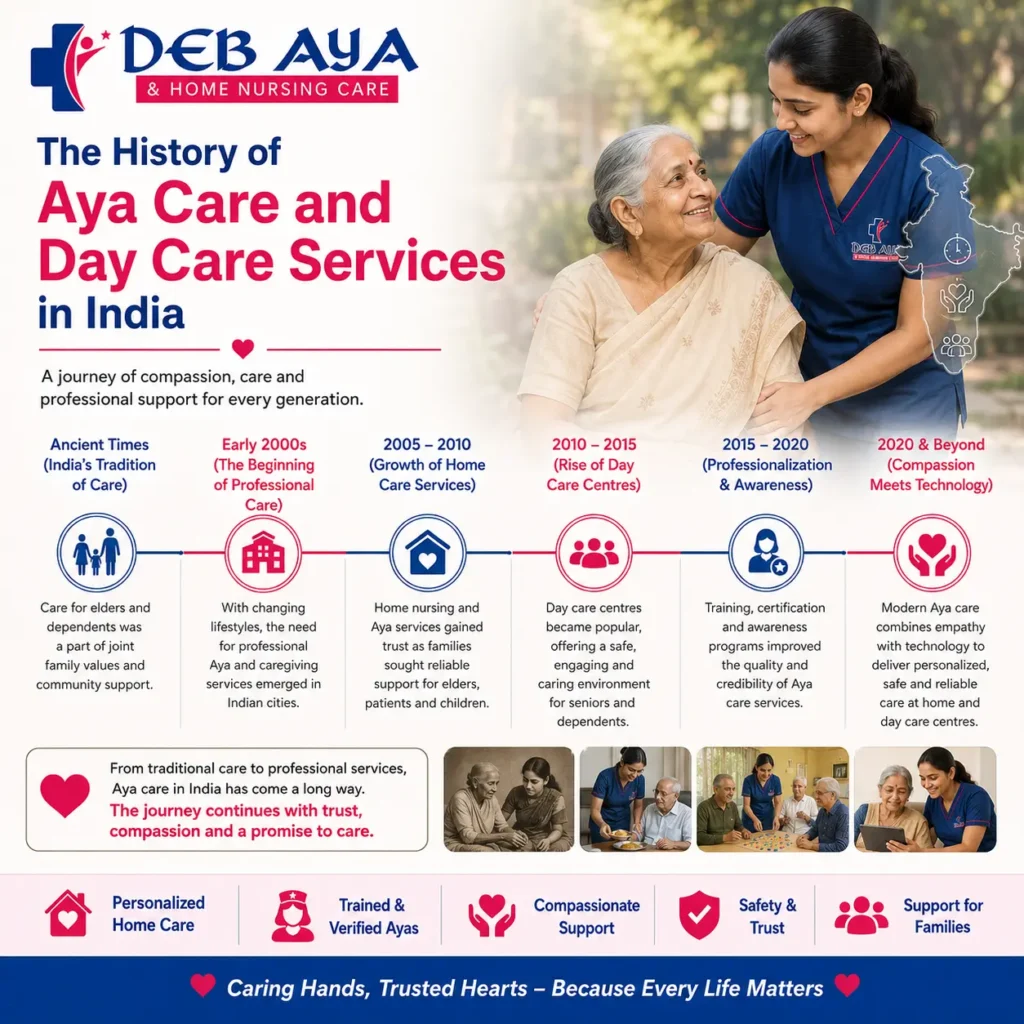
Aya care services in India have a long and culturally rooted history connected to family caregiving, healthcare support, and domestic assistance. The word “aya” itself originated during the colonial period in India and was commonly used to describe female attendants who took care of children, elderly family members, and patients in households. Over time, the role evolved from informal domestic support into a structured caregiving profession that today forms an important part of India’s healthcare and home assistance industry. Historically, Indian families depended mainly on joint family systems for caregiving. Elderly parents, sick relatives, and children were usually cared for within the household by family members, especially women. However, during the British colonial era, urban households and British families living in India began hiring “ayas” as dedicated caretakers for children and patients. The term later became widely accepted across Indian cities including Kolkata, Mumbai, Chennai, and Delhi. During the late 19th and early 20th centuries, aya services became more organised in metropolitan regions where urbanisation and professional employment reduced the availability of family caregivers at home. Hospitals and nursing homes also started appointing attendants to support nurses and assist patients with daily activities such as feeding, cleaning, mobility, and personal hygiene. After India’s independence, healthcare infrastructure slowly expanded across the country. Government hospitals, private nursing homes, and maternity centres increased in number, creating demand for trained attendants and patient support workers. However, aya care still remained largely informal for several decades, operating mainly through local referrals and neighbourhood agencies. The major transformation began after the 1990s with rapid urbanisation, nuclear family growth, and increased migration for jobs. According to India’s Census and National Family Health data, urban households grew significantly during this period, while the elderly population also increased steadily. These social changes created a strong need for professional home caregiving services. As more women joined the workforce, families started depending on aya centres for childcare, newborn care, elderly assistance, and patient recovery support. Cities like Kolkata became major hubs for aya service agencies because of the high demand for trained caregivers. Eventually, the concept spread across smaller cities and states throughout India. Day care services also developed alongside aya care. Initially focused mainly on child care for working parents, day care centres later expanded into elderly day care and rehabilitation support services. Senior citizen day care facilities started emerging in urban India to provide social interaction, healthcare monitoring, meals, and recreational activities for elderly individuals during working hours. Today, India’s home healthcare industry has become one of the fastest-growing sectors in the country. Reports from healthcare industry studies suggest that India’s home healthcare market is witnessing strong annual growth due to rising chronic illnesses, ageing population, and increasing preference for home-based treatment. The COVID-19 pandemic further accelerated the demand for trained caregivers, home nursing attendants, and patient care assistants across India. Modern aya services are now far more professional than before. Many agencies provide trained attendants with experience in elderly care, dementia support, post-operative care, physiotherapy assistance, newborn care, and palliative care. Background verification, caregiver training, and emergency support systems have also become important parts of the industry. From its origins as a domestic caregiving role during colonial India to becoming a professional healthcare support service today, aya care has evolved significantly over the years. In modern India, aya and day care services are not just convenience-based support systems; they have become essential for managing healthcare, elderly care, and family wellbeing in rapidly changing urban lifestyles.
How Do You Select an Aya Centre in Agartala, Tripura?

Selecting the right aya centre in Agartala is an important decision for families who need professional support for elderly care, patient care, post-surgery recovery, or newborn care. In Tripura, the demand for trained caregivers and home nursing services has increased rapidly because of growing healthcare awareness, busy work schedules, and the preference for home-based treatment instead of long hospital stays. Agartala, being the healthcare hub of Tripura, has many aya centres and home nursing agencies offering 12-hour and 24-hour caregiving support. However, choosing the right service provider requires careful evaluation to ensure patient safety, comfort, and professional care. One of the first things to check is whether the aya centre provides trained and experienced caregivers. Families should ask about staff training, patient handling skills, elderly care experience, and emergency response capability. Professional agencies usually provide attendants who understand basic healthcare support, hygiene maintenance, medication reminders, and mobility assistance. Some well-known service providers in Agartala include Deb Aya & Home Nursing Care, SANJEEVANI HOME CARE AGARTALA, Santoshi Home Nursing Care, and HOME HEALTH CARE (A Unit Of Home Nursing Care). These centres offer home-based caregiving services for elderly patients, post-operative care, and long-term assistance. Another important factor is background verification. Families should always select an aya centre that verifies the identity and records of caregivers before assigning them to homes. This ensures safety and builds trust. Many people today prefer registered agencies because they provide replacement support if a caregiver becomes unavailable unexpectedly. Discussions on online community platforms also show that verified agencies are considered safer than unknown personal referrals for elderly care. Checking reviews and service ratings is equally important. A centre with strong local feedback often indicates reliable service quality. For example, Deb Aya & Home Nursing Care has received a high number of positive customer reviews in Agartala, reflecting customer satisfaction and trust. Location and availability also matter while selecting an aya centre. Agencies located near areas such as Indranagar, Bardowali, Hapania, and Airport Road can often provide faster emergency support and quicker caregiver replacements. Centres like Long Life Home Health Care and City Health Point Home Nursing Care provide round-the-clock support services in different parts of Agartala. Families should also discuss service charges clearly before hiring. In Agartala, aya service costs generally depend on working hours, patient condition, caregiver experience, and whether specialised nursing support is required. Transparent pricing helps avoid future misunderstandings. Another key point is communication. A professional aya centre should maintain regular contact with the patient’s family and provide updates regarding health condition, behaviour, food intake, and medication schedules. Good communication improves patient confidence and family satisfaction. It is also advisable to visit the agency office personally before finalising the service. During the visit, families can understand the professionalism of the organisation, staff behaviour, and support system. Centres such as SEBABRATA NURSING HOME and SANJEEVANI HOME NURSING CARE are among the recognised healthcare support providers operating in Agartala. As healthcare needs continue to grow in Tripura, selecting a dependable aya centre has become essential for ensuring safe and compassionate home care. A trusted caregiver not only supports the patient physically but also provides emotional comfort and confidence to the entire family.